
In this article we will explore some of the highest bridges in the world. The such high bridges are built using mind and engineering. People fear of their heights after Seeing them. In this article the bridges are ranked by their deck height, which is the vertical distance from the roadway to the ground or water below. So let’s know.
5) Jinan Bridge
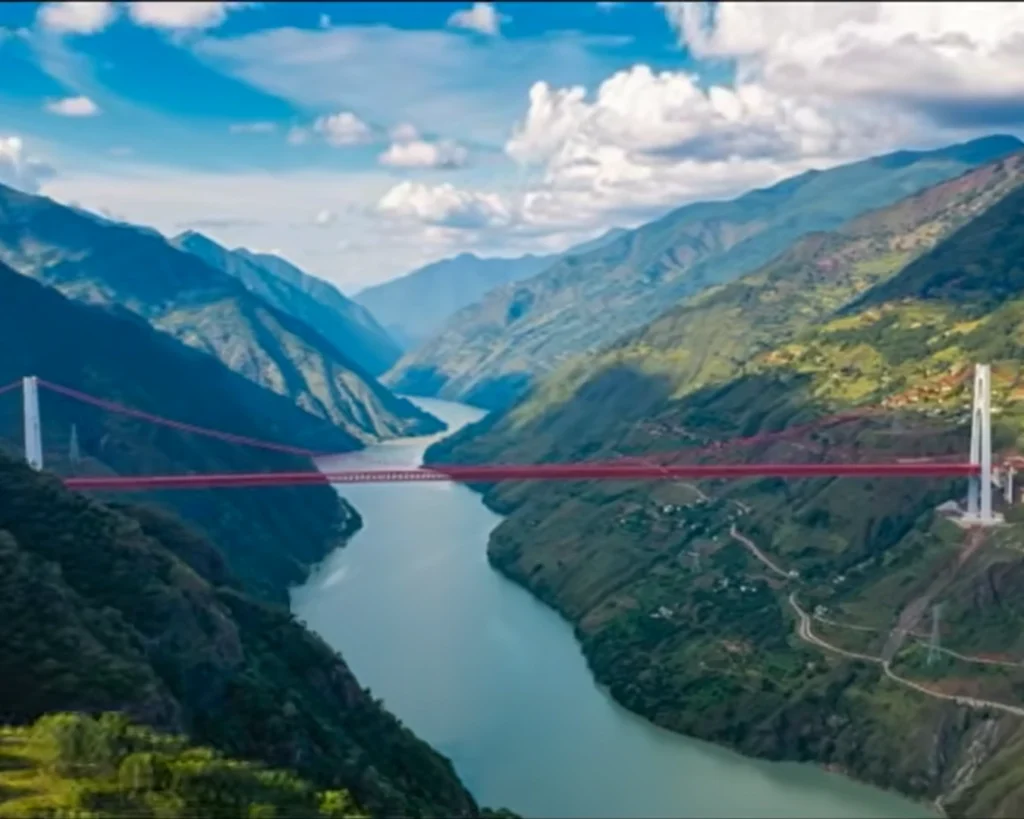
One of the highest bridges in the world is Jinan Bridge, in China, opened in 2020 and is a remarkable structure. It carries an expressway at a height of 461 meters (about 1512 feet) above the Ginsha River, which is the upper course of the Yangtze River, the longest in Asia. The bridge features a main span of approximately 1386 meters, exceeding one kilometer from tower to tower, making it a significant engineering feat.
This region is known for its stunning scenery, characterized by steep canyon walls and rushing water. Building the bridge at such a height and across this rugged terrain required powerful towers for support. The bridge provides a quick and easy crossing for travelers, eliminating the need for a long and difficult descent into the gorge and a strenuous ascent back out.
The unique aspect of this bridge is the river below, which is a youthful and wild version of the Yangtze River. As this water travels downstream, it will eventually become a grand river that supports major cities and large ships. However, near its source in the highlands, it is a fierce torrent surrounded by towering cliffs.
The nearly 1400-meter main span illustrates the vast gap that needed to be crossed. Creating a shorter span was not possible due to the width of the gorge. To successfully support such a lengthy and high structure, the bridge was designed with strong towers and cables made from numerous wires. The effort put into building the Jinan Bridge provides travelers with an efficient and enjoyable crossing over the gorge in just moments.
4) Puli Bridge
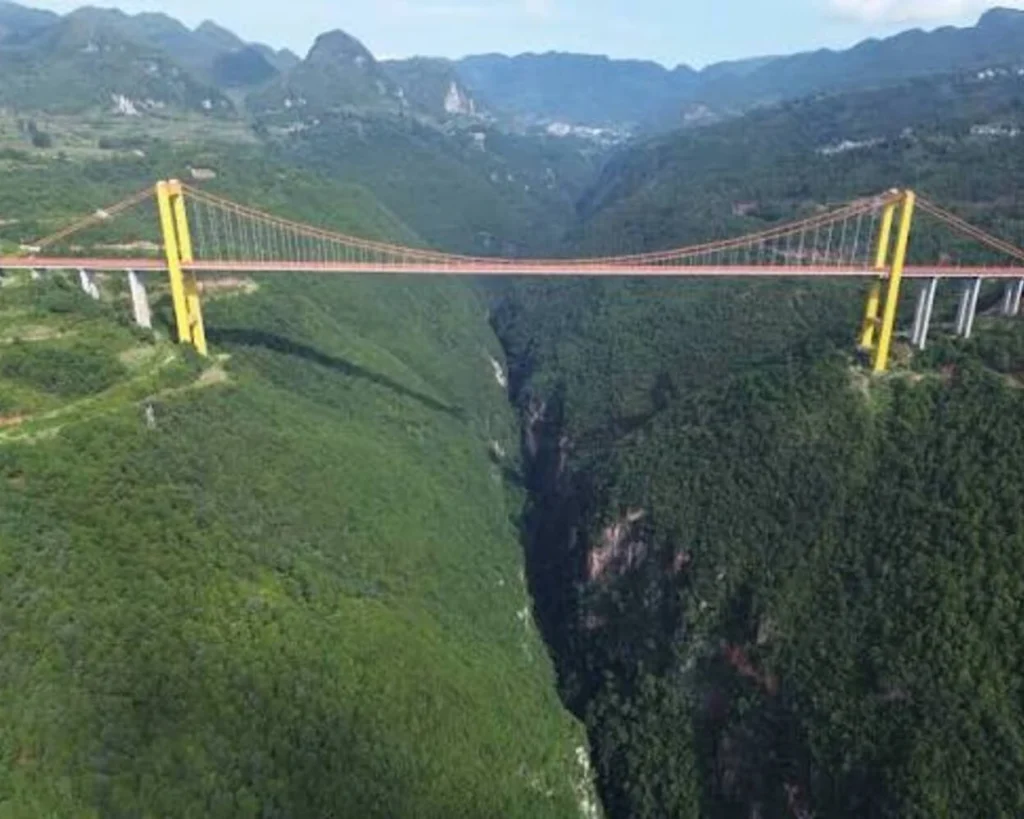
One of the highest bridges in the world is Puli Bridge, in China, ranks as the fourth highest bridge. Opened in 2015, it stands 485 meters (about 1,591 feet) above the Puli River, making it higher than most buildings in the world. This bridge carries the Roui Expressway, a vital route that connects through the mountainous southwest of China. Motorists regularly cross the bridge, often unaware of its impressive height, which exceeds the observation decks of many skyscrapers.
Additionally, there is a higher crossing further along the route, featuring a main span of 628 meters, illustrating its design as a significant suspension bridge. The drop of 485 meters is hard to fully comprehend, but visualizing it as lower than the tallest towers can help illustrate the bridge’s remarkable view from its deck, overlooking the river below.
To truly appreciate the height of the bridge, one must either look over the edge or observe it from a distance. The Puli Bridge is part of the larger Roui Expressway network, a critical roadway through challenging mountainous terrain. Building such a structure in a remote, rugged area required exceptional effort and planning, with materials and workers brought to high, precarious locations on canyon walls.
Bridges like the Puli serve not just as standalone structures but as essential links in a vast network. This ambitious highway project, which traverses rough landscapes, relies on bridges like the Puli to avoid lengthy detours and winding routes, keeping travel efficient.
3) Sidu River Bridge
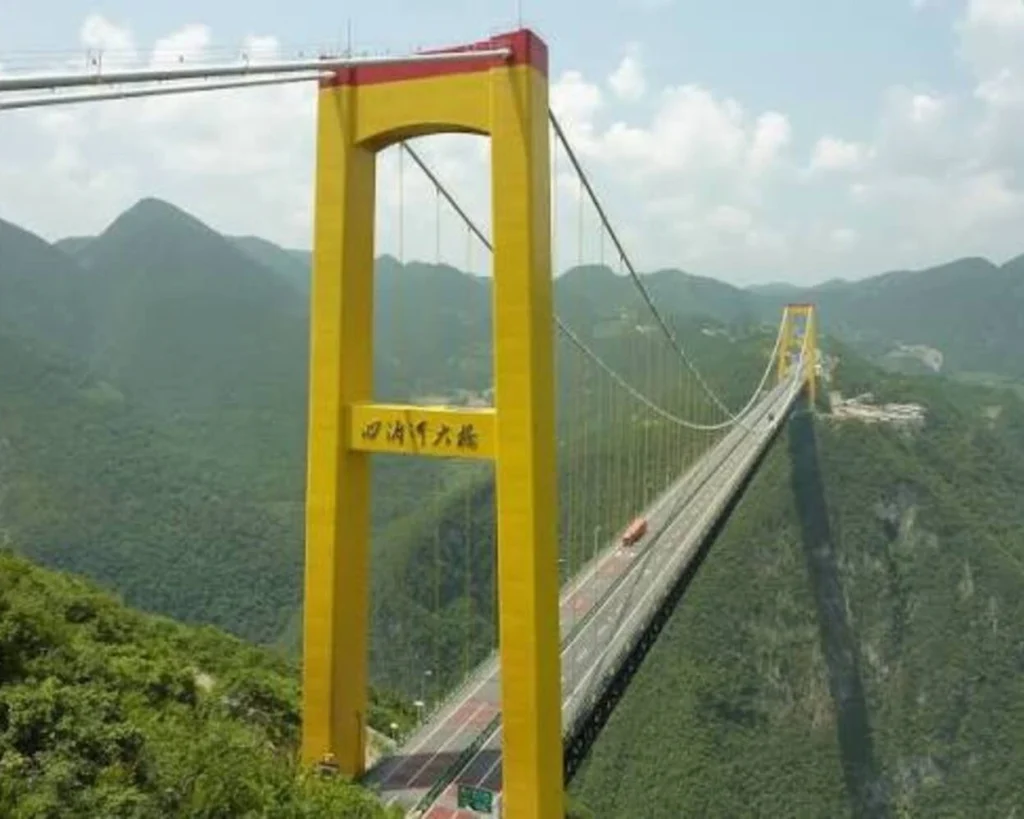
One of the highest bridges in the world is Sidu River Bridge, in China, is renowned for its remarkable construction story and held the title of the world’s highest bridge for seven years after its opening in November 2009. Located in the Hubei province, it spans 496 meters (approximately 1,627 feet) above the Cidu River Gorge.
Engineers faced significant challenges because the gorge was too deep and wide for traditional construction methods. Typically, the first step in building such a bridge is to establish a pilot line across the gap, but in this case, conventional methods like using boats or manual techniques were not feasible.
To overcome this, builders innovatively fired a rocket across the canyon which carried a thin pilot line to the other side. This single line initiated the construction of the bridge, allowing for heavier cords and cables to be strung across gradually. The bridge’s design features two H-shaped towers from which the deck is suspended, making it one of the most dramatic and photographed bridges in the world. On misty days, the bridge appears to float in the clouds, giving it a surreal quality.
The entire structure’s integrity relies on its main cables, which are made up of thousands of high-strength steel wires bundled together. Vertical cables hang from these main cables and support the roadway, enabling the bridge to hold immense weight. Once completed, it became the highest bridge in the world and held this title until it was surpassed in 2016. Its stunning visibility in the clouds attracted many photographers, showcasing its architectural beauty.
The construction of the Sidu River Bridge represents a significant effort to improve transportation in a region previously isolated by nature. It connects valleys and towns that had been cut off by difficult mountain roads for generations. For communities on either side of the gorge, the bridge transformed travel, effectively reducing the time between neighbors who had once been a day’s journey apart.
2) Duge Bridge
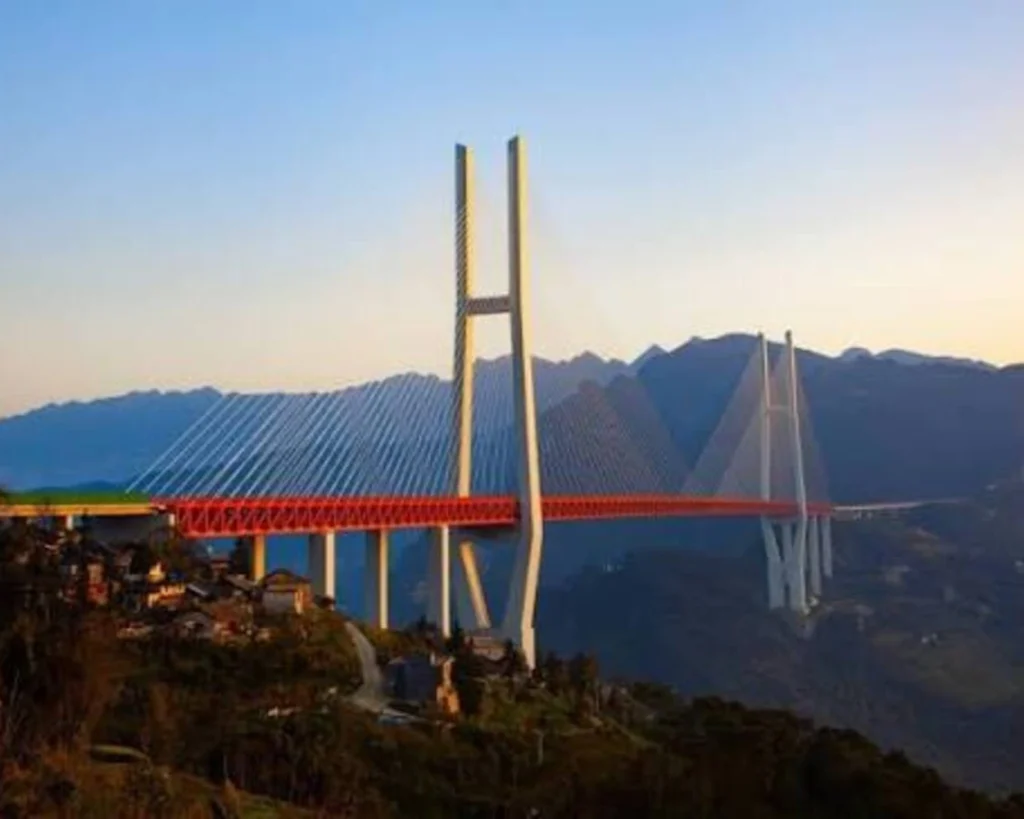
One of the highest bridges in the world is Dug Bridge, in China, located on the border between the provinces of Gisho and Yunan, was the highest bridge in the world until recently. Opened in 2016, it is a cable-stayed bridge that rises 565 meters, or about 1,854 feet, above the Bonan River. This bridge was a significant engineering achievement, becoming the first to exceed the 500-meter height barrier. With a main span of 720 meters, it allows travelers to cross at a height greater than most skyscrapers.
The Duge Bridge transformed travel for the local population, reducing what used to be a lengthy journey down into a gorge to a quick crossing. For nearly ten years, it held the title of the highest bridge until it was surpassed by another bridge built over the same river, not far away. Despite losing its title, the Duge Bridge remains one of the most famous and photographed high bridges globally, recognized for its beautiful design and status in bridge-building history.
Unlike many iconic suspension bridges, the Duge Bridge is designed as a cable-stayed structure, meaning the deck is supported directly by cables from towers, creating a distinctive pattern. This design not only enhances its aesthetic but also effectively accommodates its significant span. The bridge’s height and design make it a remarkable achievement, inspiring awe in those who cross it.
Crossing the Duge Bridge offers a serene experience, with a smooth road that leads travelers across the gorge and offers views of the mountains and the river below. Beyond its beauty, the bridge has greatly improved connections between the two provinces, fostering trade, tourism, and community interactions that were previously limited by the challenging geography.
As a solution to a long-standing problem, the Duge Bridge has become a vital lifeline for the region and a source of pride for the local people. It stands as a testament to innovative engineering and its positive impact on communities, proving to be much more than just a means of transportation.
1) Huajiang Grand Canyon Bridge
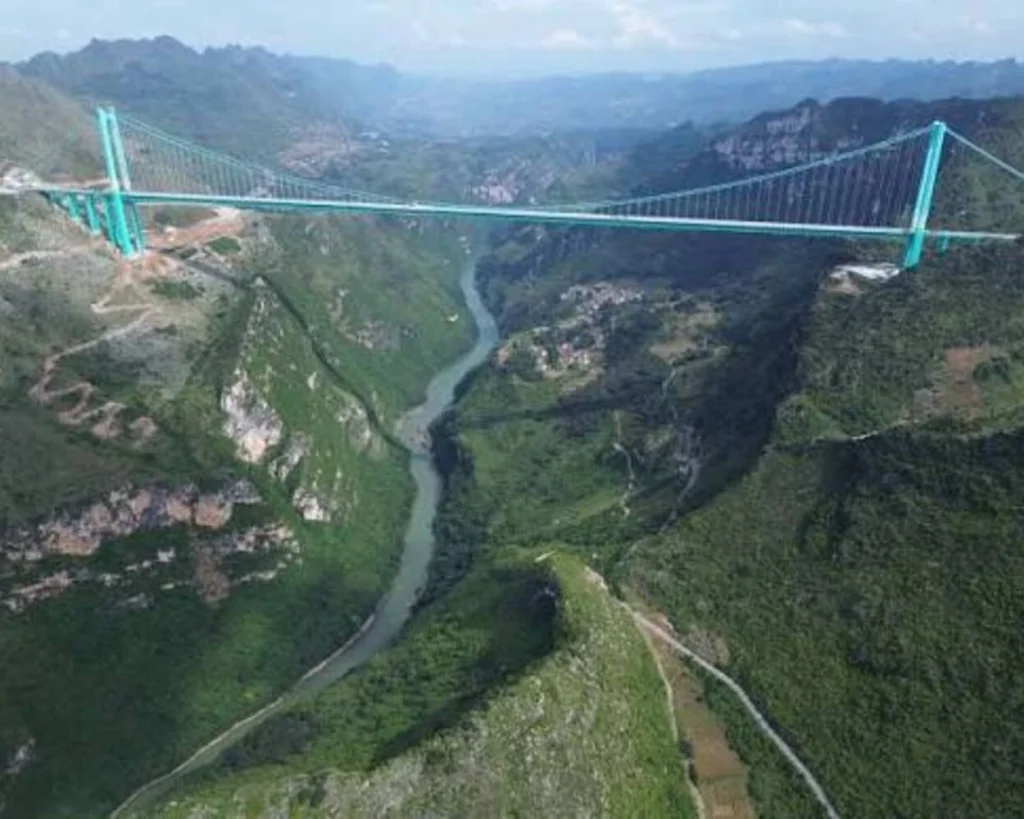
One of the highest bridges in the world is Huajiang Grand Canyon Bridge, in china, is the highest bridge ever built, reaching a remarkable height of 625 meters (2,051 feet) above the Bay Pan River. It is set to open in September 2025 in Guisho province. This bridge not only surpasses the previous record holder, the Duge Bridge, by 60 meters but also holds several other records.
It is a steel truss suspension bridge with a total length of 2,890 meters and a main span of 1,420 meters, making it the longest span bridge in mountainous terrain. The bridge is supported by two towers, the taller of which rises to 262 meters. The construction took only three years and used around 22,000 tons of steel.
To ensure safety, engineers employed advanced technology, including intelligent cable cranes, drones, and sensor networks that monitored the bridge in real time. Before opening, nearly 100 heavy trucks were tested on the bridge to confirm its strength. This bridge has greatly improved daily travel, reducing what used to be an hour-long journey down into the canyon to just around 90 seconds above the gorge.
The construction faced significant challenges, as the canyon is not only deep but also located in a seismically active area. Every part of the structure had to be designed to resist earthquakes. The bridge has transformed the landscape, which was once an obstacle, into a breathtaking sight that draws visitors from afar. People eager to experience walking across the highest bridge will find the view both thrilling and overwhelming.
Standing at the edge of the Huajiang Canyon, one can see the bridge stretching across a deep chasm, giving the observer a unique view where even trees look small from such a height. The beauty of the canyon has made the bridge a destination on its own, showcasing human achievement against the backdrop of nature.
This bridge symbolizes modern engineering’s capabilities, appearing delicate yet robust as it stretches into the sky, with the clouds below. The Huajiang Grand Canyon Bridge stands as a testament to human creativity and ambition, securing its place as a remarkable feat in engineering and design.