
In this article we will explore the amazing facts about Gambia. Gambia is a small country in Africa known for having the lowest wages and income on the continent, yet it is famous for making loud and bold statements. Despite its challenges, the country has unique aspects worth exploring, such as its love for tourism, the migration of large animals.
Gambia is the smallest country in Africa, covering an area of about 4,361 square miles (11,295 km²). In comparison to Nigeria, the largest country in Africa, Gambia is just a fraction of its size. It stretches about 300 kilometers (186 miles) from west to east, but its width does not exceed 48 kilometers (30 miles) at any point. The country is bordered by the North Atlantic Ocean to the west and surrounded by Senegal on three sides. When viewed on a map, Senegal looks like a person with flowing hair, while Gambia resembles their mouth.
Gambia and Senegal once worked together in the Sambia Confederation, which lasted seven years. They even considered unification, but Gambia’s concerns about losing its sovereignty ended this alliance. Despite its small size, Gambia has a high population density, with roughly 2.28 million residents, resembling Qatar’s population density. So let’s begin.
5) Lowest Wages In The World

One of the amazing facts about Gambia is that Gambia has the lowest wages in the world, with an economy focused on agriculture, fishing, and tourism. About one-third of its population lives below the global poverty line, and nearly 50% earn less than $1.50 a day. The low income raises questions about what people can buy.
Gambia’s weekend is from Thursday to Saturday, which allows workers more rest but can hinder business owners due to fewer working hours. The minimum wage is just 13 cents per hour, or about $317 a year, placing Gambia among the seven countries with the lowest incomes. The income gap and poor living conditions present significant challenges for the nation.
4) Voting System

One of the amazing facts about Gambia is that the Gambia has a unique voting system using marbles. When voters arrive at polling stations, their identification is verified, and they are directed to drums painted in the colors of different party candidates, which also display candidate photos. Voters receive a marble from an election official, which they drop into a pipe on top of each drum. A bell rings when a marble drops, helping officials ensure that no voter votes more than once.
The marbles are then collected in a tray with holes, where they are counted and tallied like traditional ballots. This method promotes fairness and public confidence in the electoral process. The marble voting system was created after The Gambia gained independence in 1965, as a response to high illiteracy rates in the population.
Even though it might seem outdated, the system is viewed as transparent and helps prevent election rigging. It played a crucial role in ending the dictatorship of former president Yahya Jammeh, who, despite ruling through fear, acknowledged the importance of the voting process. There are discussions about transitioning to paper ballots. On November 4, 2021, Gambians participated in their first democratic election since 2016, utilizing this marble voting method.
3) Free Haircut

One of the amazing facts about Gambia is that Gambia have free haircut days. On these days, young volunteers set up in busy areas with folding chairs and tools like clippers and scissors to give free haircuts to locals. These events help people achieve stylish haircuts without needing to pay.
They usually last 1 to 2 days and happen monthly or every few months in various locations such as sidewalks, street corners, markets, and beaches. The gatherings create a friendly atmosphere, attracting both locals and curious tourists, who enjoy watching and participating in this community service.
2) Sen Gambian Stone Circles
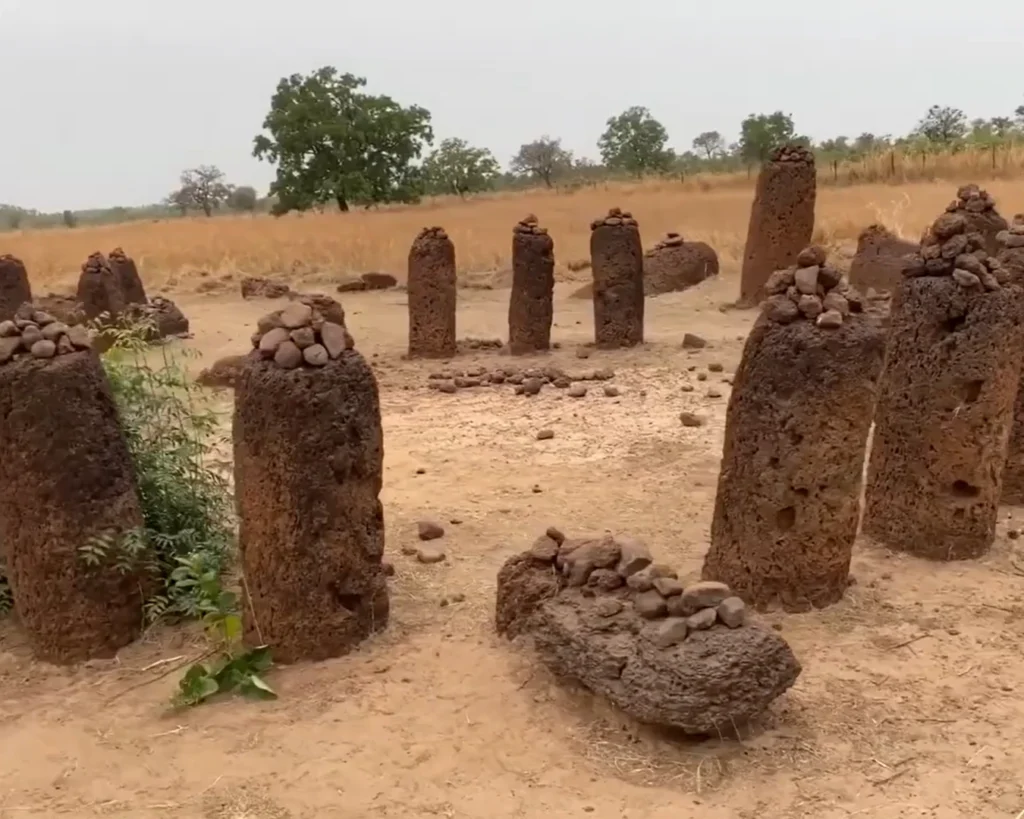
One of the amazing facts about Gambia is that Sen Gambian Stone Circles, which are arranged in a circular formation made of standing stones. Archaeological evidence suggests these stone circles served as burial sites and were likely tied to agricultural events like the summer solstice. Located in The Gambia, in the Central Sagal region north of Janur, this area spans approximately 30,000 km² and is sometimes classified into the Wasu Gambian and Sen Salum groups.
The stones in these circles typically reach an average height of 2 meters and can weigh up to 7 tons each. Over 1,000 stone circles can be found across an area that is 100 km wide and 350 km long along the Gambia River. Originally, the monuments were upright pillars, though some have collapsed. Made mostly of laterite and featuring smooth surfaces, the monoliths occur in various formations, including circles, double circles, and isolated rows predominantly found to the east.
The site comprises four major groups of stone circles—Sin Nayen, Wasu, Wana, and Kerbach—totaling 993 stone circles and many burial mounds, some excavated with dates ranging from the 3rd Century BC to the 16th Century AD. This site is recognized as a UNESCO World Heritage site.
1) Giant Rat
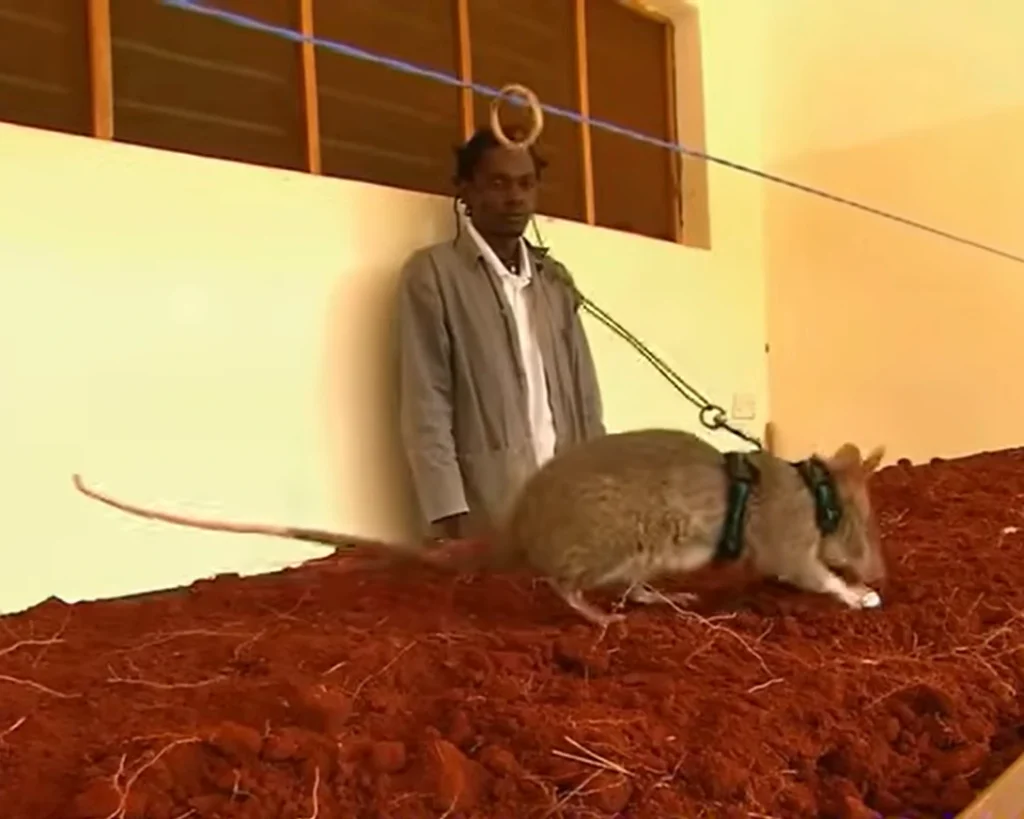
One of the amazing facts about Gambia is that the Gambia giant rat, known scientifically as Cretus gambianus, is an impressive rodent that can measure 2 to 3 feet long, including its tail. It has a brown gray or light brown coat, large ears, and a long tail. Despite its size, this rat is not aggressive and typically avoids humans unless disturbed. The Gambia giant rat is notable for its intelligence and special training.
It has been used by the US Military and other organizations for important missions, especially in public health. With a keen sense of smell, these rats can detect traces of tuberculosis bacteria accurately, helping to save thousands of lives and contributing significantly to health efforts.
List Of Amazing Facts About Gambia
- Lowest Wages In The World
- Voting System
- Free Haircut
- Sen Gambian Stone Circles
- Giant Rat
Top5 Amazing Facts About Elon Musk