
In this article we will compare Swan vs Goose to highlight their unique features, such as their appearance, behavior, family life, and flying skills. When people see large white water birds on a lake, they often think they are swans, but goose can also look similar. Both birds are in the same family and share habitats like lakes and rivers. However, swans and goose are quite different. Let’s explore the interesting differences between these two iconic water birds.
5) Appearance
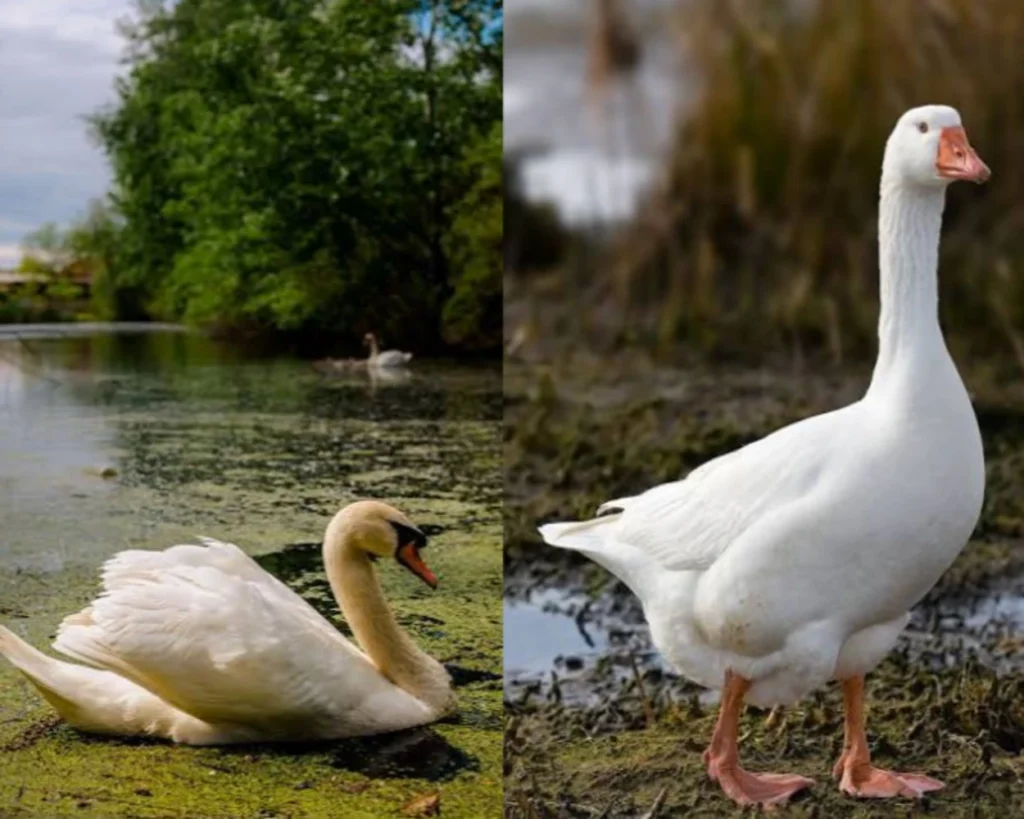
Swan vs Goose differ mainly in size and appearance. Swans are much larger, weighing between 15 and 35 lbs, while goose weigh around 5 to 15 lbs. Swans have long, elegant necks that curve into an S-shape, allowing them to reach underwater plants. In contrast, goose have shorter, thicker necks that look sturdier.
The wingspans of swans can exceed 10 feet, making them some of the largest flying birds, whereas goose wingspans range from 4 to 6 feet. Their coloration also varies; many swans are mostly white, with some black swans in Australia. Goose come in many colors, such as gray, brown, black, and white, which help them blend in with their surroundings.
4) Habitat
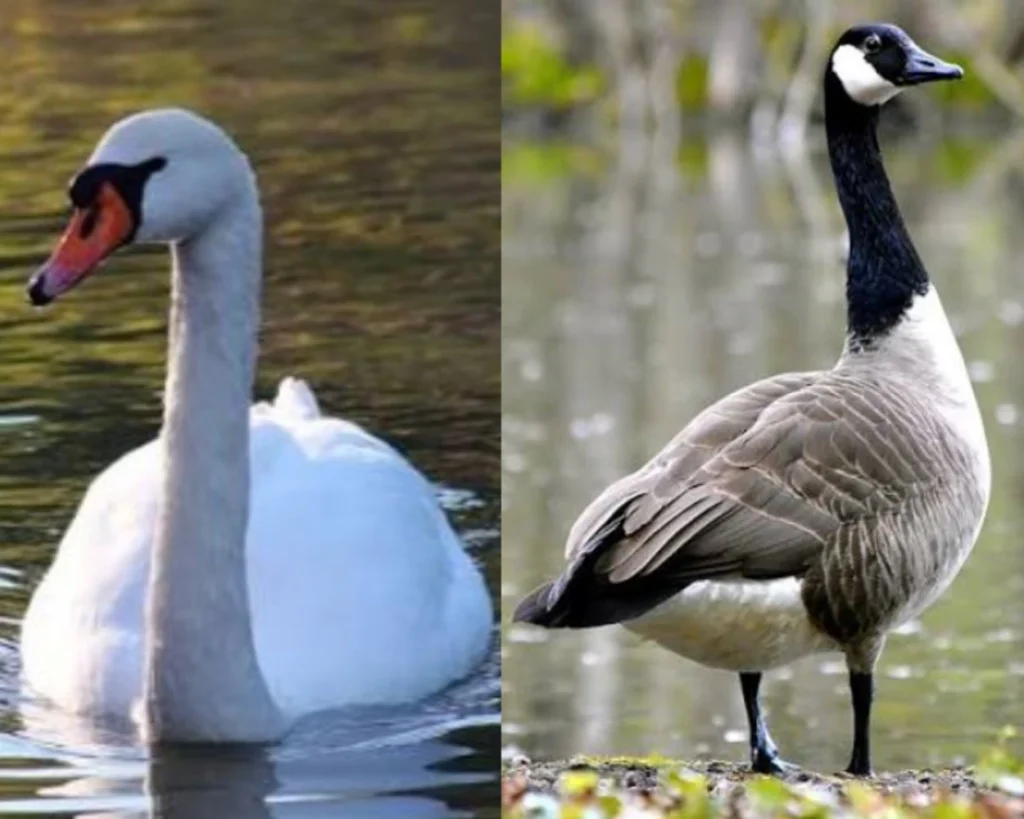
Swan vs Goose another differ mainly in habitat and distribution. Swans are usually found in calm lakes, ponds, and slow rivers, favoring large water bodies that allow them to swim, feed, and take off easily. Many swan species live in temperate and colder areas. In contrast, goose can adapt to various habitats such as wetlands, grasslands, agricultural fields, coastal marshes, parks, and urban settings. This adaptability helps them live in many different locations.
Swans are often territorial, especially during breeding, guarding specific areas in lakes from others, which is why they are typically seen in smaller groups. On the other hand, goose are social birds that gather in large flocks outside nesting season, sometimes numbering in the hundreds or thousands, which helps protect them from predators and enhances migration communication.
3) Behavior
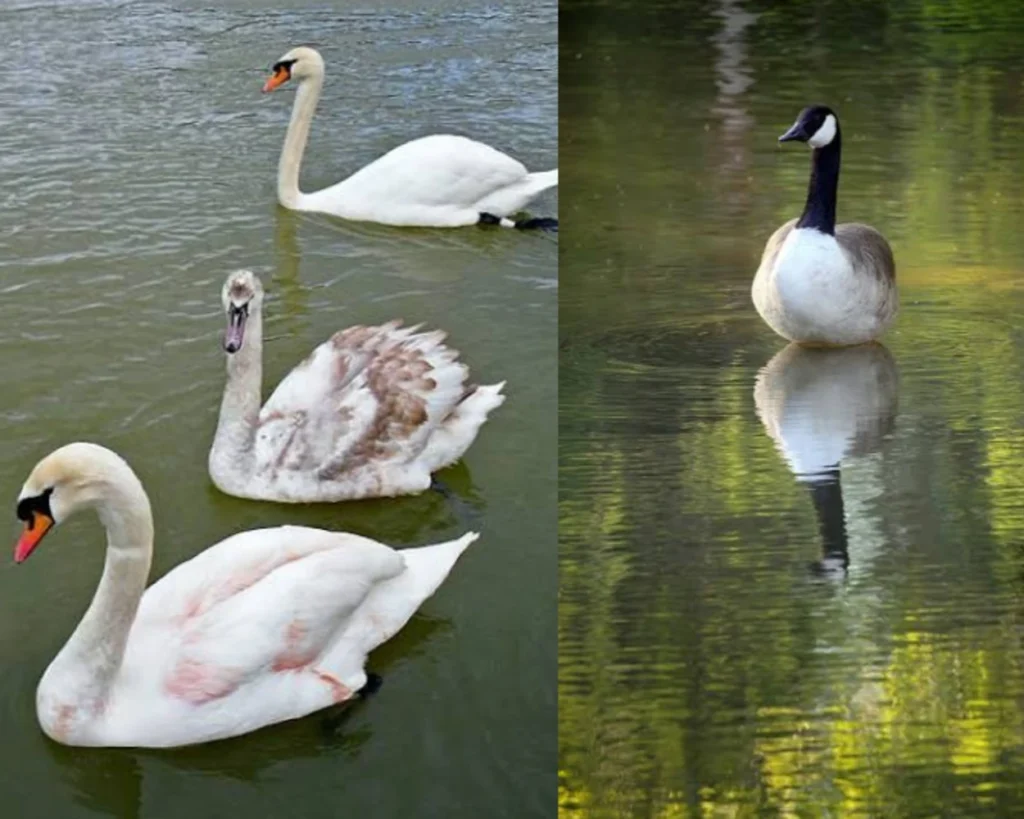
Swan vs Goose another differ mainly in behavior and temperament. Swans are often seen as calm birds due to their elegant look, but they can be quite aggressive, especially during breeding season. They may chase away animals, birds, or humans that get too close to their nests. Swans use their size and loud hissing as a way to scare off threats, often displaying aggressive behavior to defend their territory.
While goose are also known for being aggressive, particularly around their nests, they rely more on loud calls and group defense. When alarmed, a flock of goose makes a lot of noise. Outside of breeding season, goose are more social and work together, spending time building relationships and communicating with each other through various sounds and body movements.
2) Diet
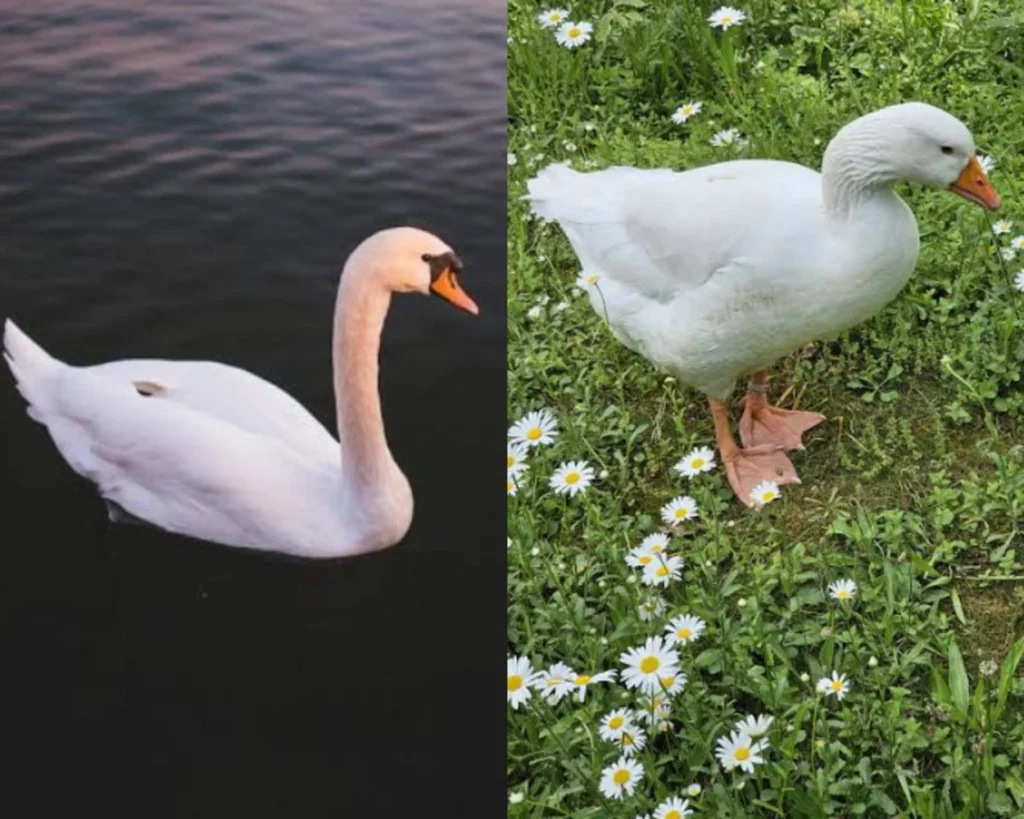
Swan vs Goose another differ mainly in diet and feeding habits. Swans are mainly herbivores, feeding on aquatic plants like pondweed, algae, and submerged vegetation. Their long necks help them reach food deep underwater. While foraging, they exhibit a behavior called appendage feeding, where they tip forward and stretch their necks underwater with their tails in the air, allowing access to hard-to-reach plants.
In contrast, goose primarily eat grasses, seeds, grains, and crops, spending more time grazing on land. They resemble tiny lawnmowers as they clip grass in fields and parks. Both birds occasionally eat insects or small aquatic animals, but most of their diets consist of plant material, which aligns with their preferred habitats.
1) Communication
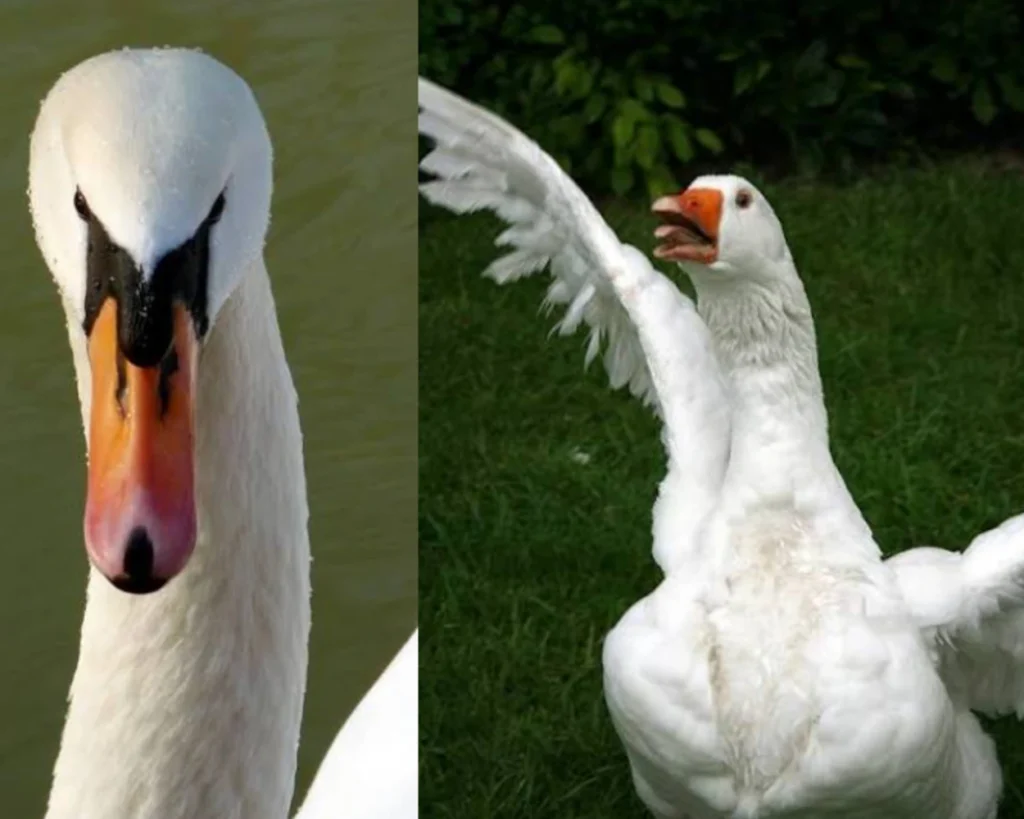
Swan vs Goose another differ mainly in communication and vocalizations. Swans and goose communicate in various ways. Swans make sounds like hisses, grunts, whistling, and trumpeting calls. While some swan species are quiet, the mute swan, despite its name, produces softer sounds and uses body language for communication instead of loud calls.
In contrast, goose are known for their loud honking calls, which help them stay together in groups during flight and warn of danger. These calls can travel far and are especially important during migration, helping goose coordinate movements and maintain formation even in poor visibility.
Though swan and goose are related, they have distinct differences. Swans are larger, more graceful, and often more territorial, while goose are smaller, more social, and famous for their migration abilities. These differences are evident in their physical traits, feeding habits, family behaviors, and ways of communicating. Each bird type has developed unique adaptations to thrive in its habitat.
Next time you see these interesting waterfowl, you will understand what makes them different and appreciate the diversity within the bird world.