
Tasmania, is an island of Australia’s south coast. It is home to unique Tasmania wildlife. Its diverse habitats, from rainforests to coastlines, provide a safe place for species that exist nowhere else. A journey through Tasmania’s wilderness shows various endemic animals that thrive in this special environment. So let’s explores Tasmania’s fascinating wildlife, highlighting the unique traits and behaviors of its native animals.
5) Tasmanian Tiger
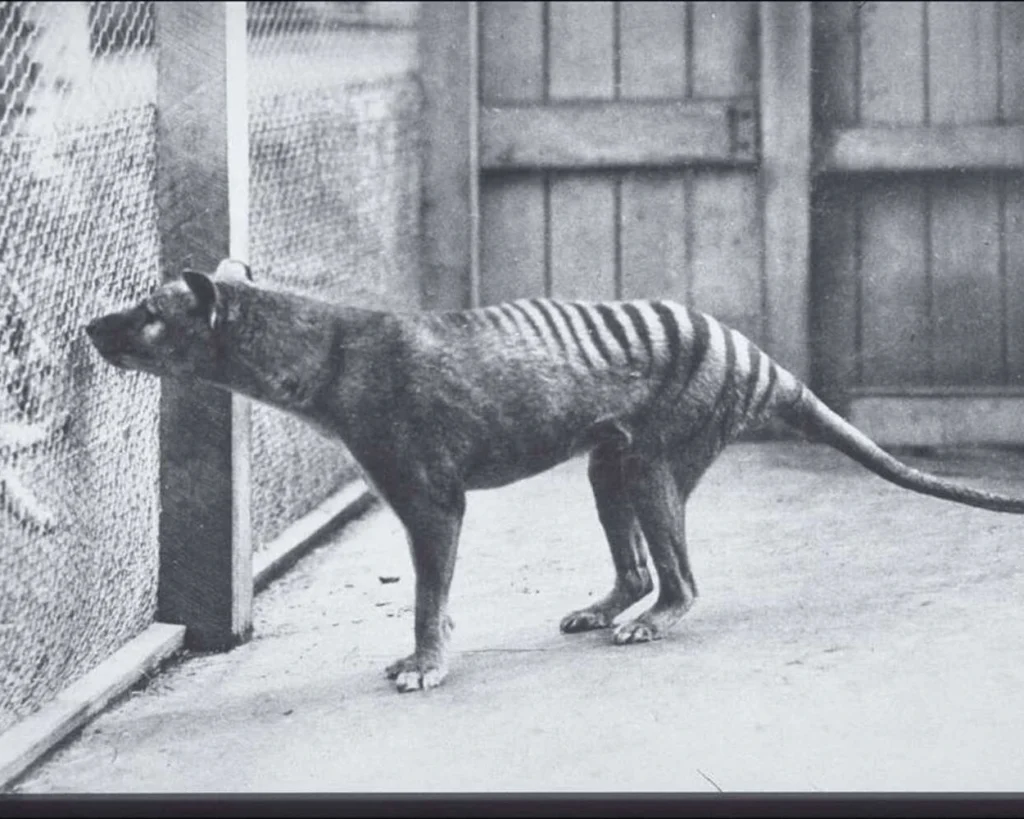
Tasmanian Tiger, was the largest carnivorous marsupial in modern times, found in Tasmania wildlife, Australia, and New Guinea. This unique animal resembled a medium to large dog, measuring 39 to 51 inches long, with an additional 20 to 26 inches for its tail, and weighing around 33 to 66 pounds. It had a slender, fox-like appearance with yellowish-brown fur and 13 to 19 dark stripes, along with a pouch for raising its young, typical of marsupials.
The decline of the Tasmanian Tiger is mainly due to human activities. European settlers in the 19th and early 20th centuries hunted the species because they were seen as threats to livestock. Combined with habitat destruction and the arrival of competing species like dogs, this led to a drastic fall in their numbers. The last known wild Tasmanian Tiger was killed between 1910 and 1920, and the species was declared extinct in 1982.
4) Tasmanian Devil
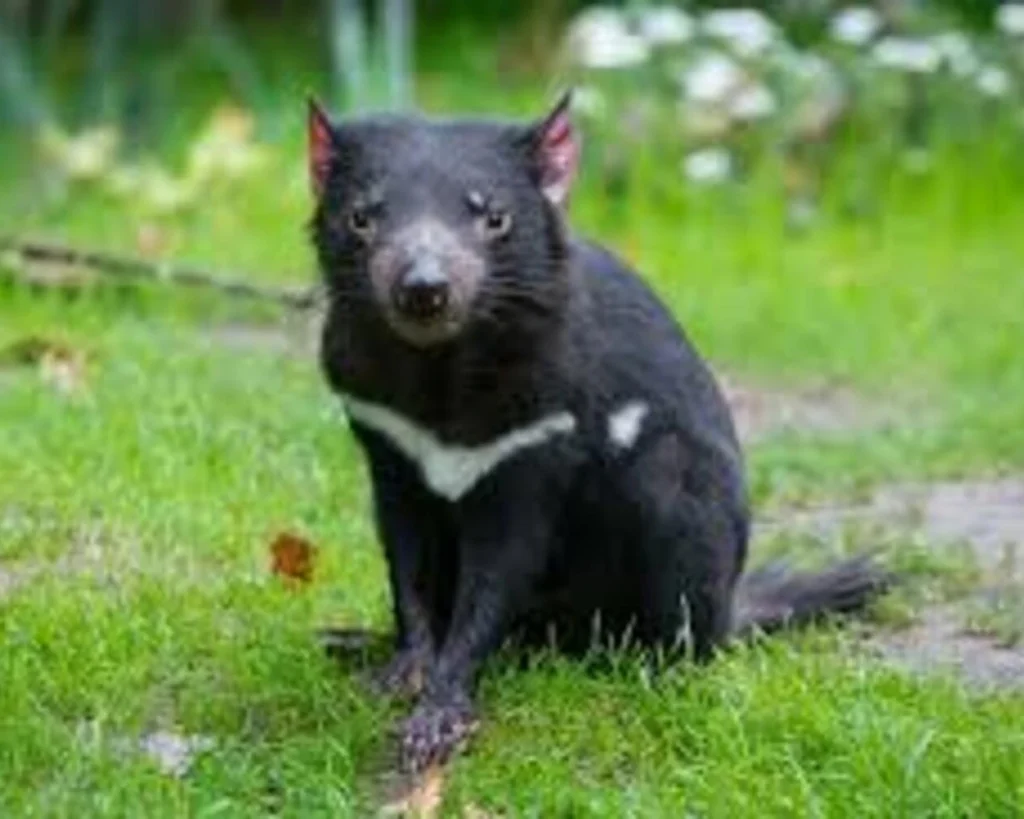
The Tasmanian Devil is a carnivorous marsupial native to Tasmania wildlife, Australia. After the extinction of the thylacine in 1936, it became the largest carnivorous marsupial. It is about the size of a small dog, has a strong build, black fur, and a strong smell. Its loud screams, aggressive feeding, and fierce behavior contribute to its “devilish” reputation.
Recently, the species has faced serious challenges from a contagious cancer called devil facial tumor disease (DFTD), leading to a sharp drop in its numbers. Conservation efforts are in progress to save this unique animal, including captive breeding and research for possible treatments for DFTD. The Tasmanian Devil is also culturally significant, being the symbol of Tasmania and recognized internationally, partly due to a popular cartoon character Taz from the Looney Tunes series.
3) Eastern Quoll
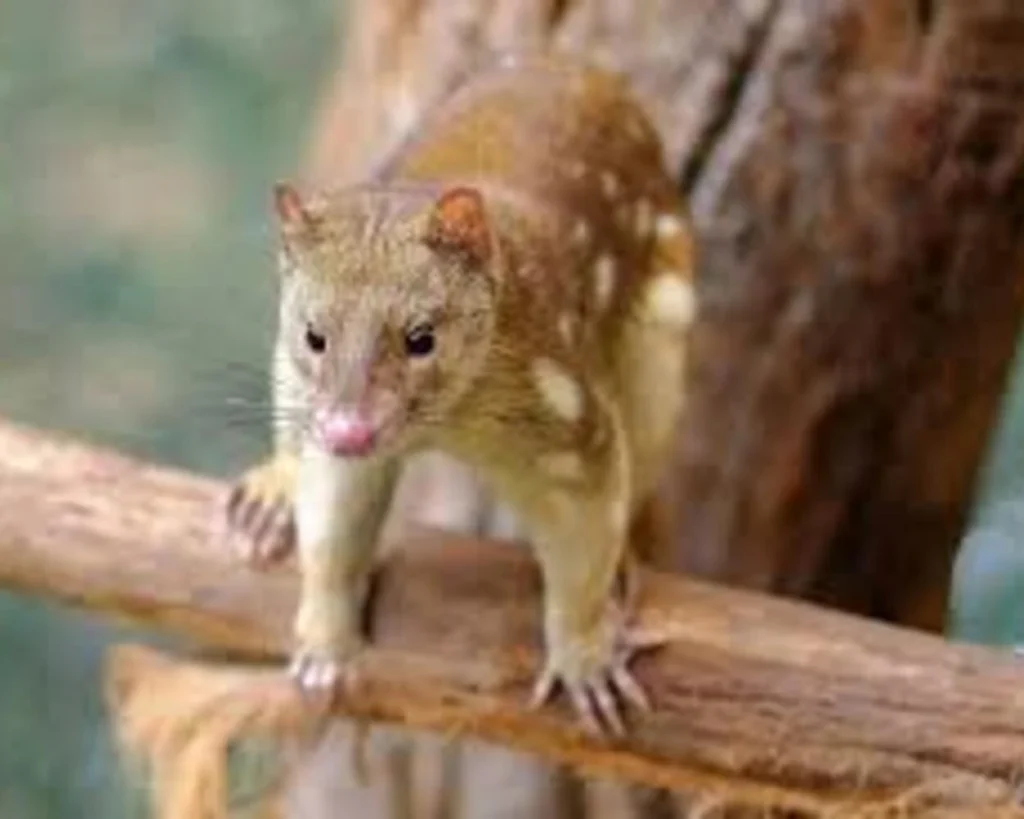
The Eastern Quoll, also known as the Eastern Native Cat, is a medium-sized carnivorous marsupial found in Australia, mostly in Tasmania wildlife. It used to be common across mainland Australia but is now more prevalent in Tasmania where it faces fewer predators, like dingoes and foxes. Eastern quolls are nocturnal hunters, feeding on insects and small mammals. They are solitary except during breeding season, which occurs in early winter.
Females can give birth to up to 30 young, but only six can survive because the mother has six teats. The young are weaned at about 10 weeks and stay in the den while the mother forages. Sexual maturity is reached at one year, but they typically only reproduce for one or two years, with a lifespan of up to six years.
2) Short Beaked Echidna
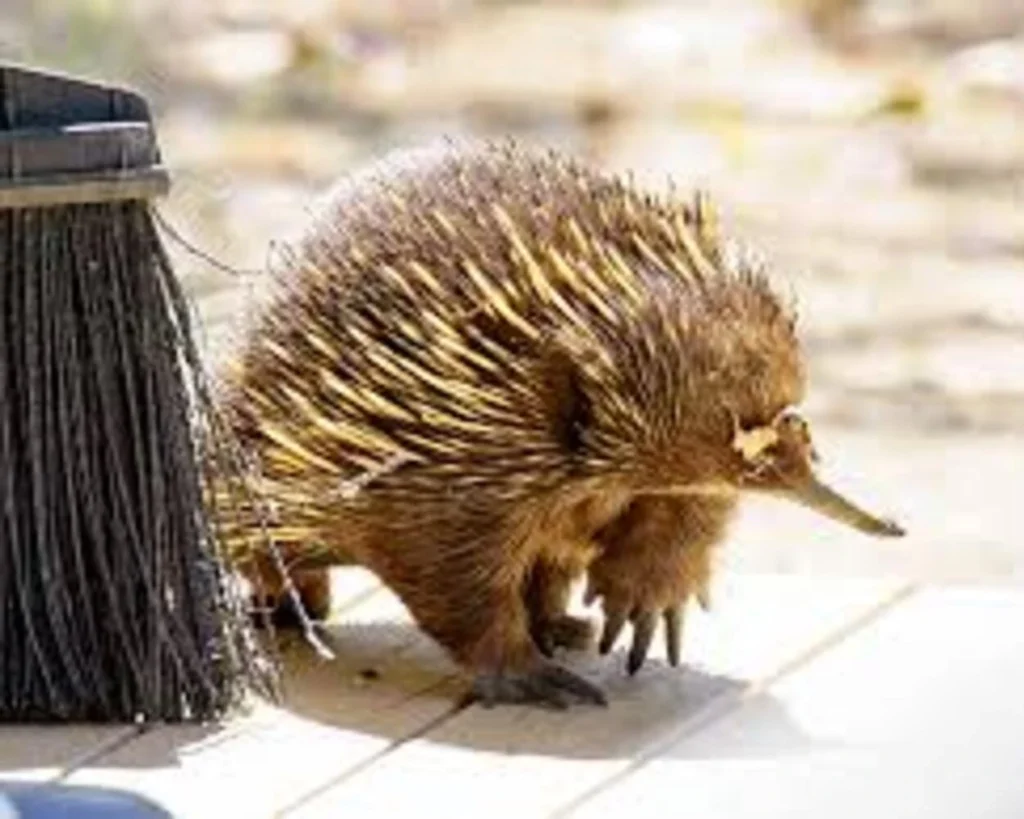
The Short Beaked Echidna, also known as the short-Nosed Echidna, is a unique mammal find in Tasmania wildlife. It covered in fur and spines, with a special snout and tongue for catching insects quickly. It is one of four living echidna species and the only one in its genus. The species lays eggs, making it part of the monotreme group, which is the only living group of mammals that does so. Short-beaked echidnas can be found in New Guinea and across various Australian environments, wherever ants and termites are found. They are smaller than the Zag species and have longer hair.
1) Sugar Glider
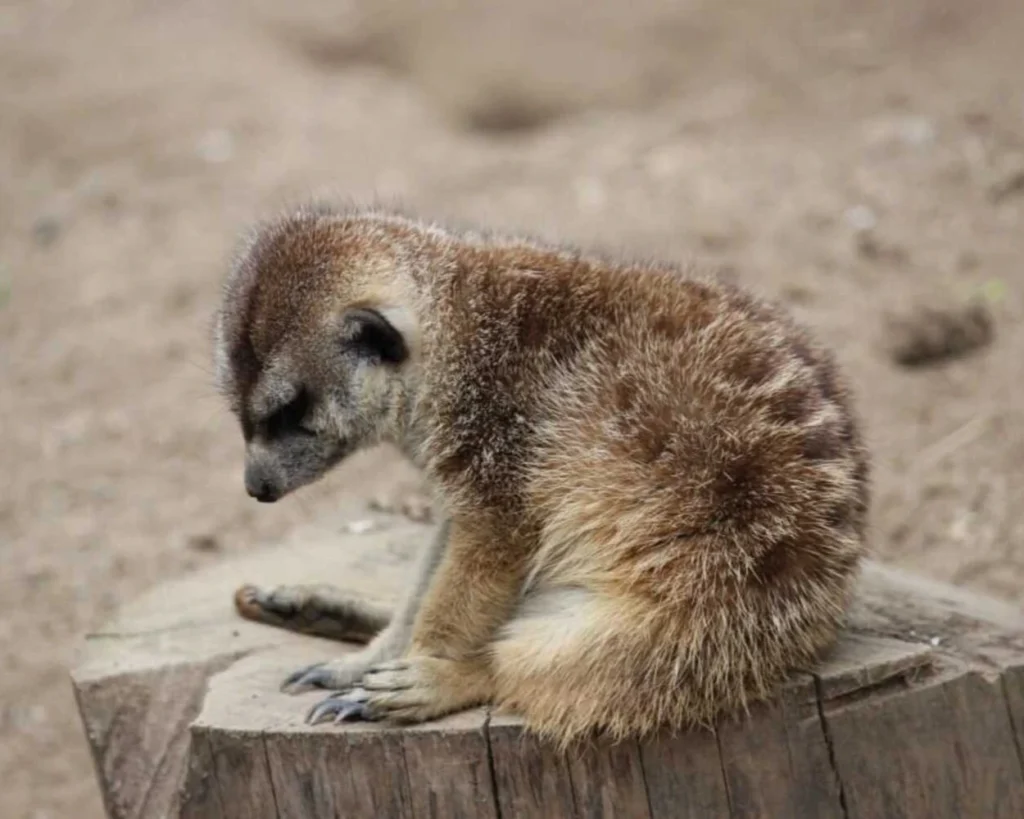
The sugar Glider is a small, nocturnal marsupial found in the forests of Southeastern Australia, including Tasmania wildlife. It measures about 24-30 cm long, has a tail nearly as long as its body, and weighs between 90-150 g. Sugar gliders have soft gray to light brown fur with a black stripe from their nose to mid-back. Their unique gliding membrane stretches from their front to hind legs, allowing them to glide up to 50 meters between trees for foraging and escaping predators. They eat a varied diet that includes sap, nectar, insects, and small vertebrates.
These social animals usually live in family groups of up to seven adults and their young, nesting in tree hollows lined with leaves. Breeding occurs once or twice a year, with a gestation of about 16 days, after which one or two underdeveloped young are born. The young crawl into the mother’s pouch to continue developing for around 70 days before emerging. Afterward, they remain in the nest for another 30-40 days until weaned. While sugar gliders are not currently endangered, they face risks from habitat loss, predation by introduced species, and the pet trade.
List Of Unique Tasmania Wildlife
- Tasmanian Tiger
- Tasmanian Devil
- Eastern Quoll
- Short Beaked Echidna
- Sugar Glider
Top5 Amazing Facts About Tasmania