
In this article we will discover effects of Pangaea. Imagine a world where the continents are joined as one large landmass called Pangaea, which existed millions of years ago. This article explores what life, civilization, and our planet might be like if the continents had never separated and remained connected. So let’s know.
5) A Unified Earth
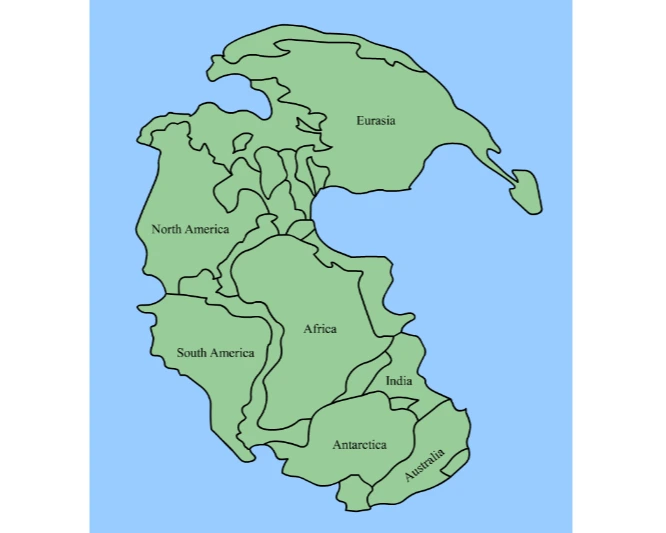
About 335 million years ago, Earth had a different appearance. The continents we know today, like North America, Europe, Asia, and Africa, were part of a large land mass called Pangea. This supercontinent was surrounded by a vast ocean called Panthalassa and smaller bodies of water like the Tethys Sea. Pangea formed due to tectonic plates moving over time, causing effects of Pangaea like smaller land masses to collide and create mountains.
Pangea was divided into two main parts: Laurasia in the north, which included North America, Europe, and parts of Asia, and Gondwana in the south, which consisted of South America, Africa, Antarctica, Australia, and India. Fossils provide strong evidence of Pangea’s existence, such as the freshwater reptile Mesosaurus found in South America and Africa, and the plant Glossopterus found across several continents. The Appalachian Mountains in North America are also aligned with the Caledonian Mountains in Europe, indicating their common origin.
Around 175 million years ago, Pangea began to break apart due to tectonic forces. This process filled rifts with water, forming the Atlantic and Indian oceans. As continents drifted apart, plants and animals evolved separately, contributing to the biodiversity we see today. Earth’s surface continues to change, and another supercontinent may form in the future.
4) Climate And Ecosystems
Effects of Pangaea, had a unique climate and ecosystems that were very different from today’s Earth. Its large, connected land mass meant there were no oceans between continents, resulting in extreme temperatures with hot summers and cold winters. The central regions were dry and desert-like due to scarce rainfall, while coastal areas experienced heavy storms and monsoons. This division created a stark contrast between the lush, humid coasts and the barren interior.
Ecosystems on Pangaea were influenced by the absence of barriers like oceans or mountains, allowing species to move freely but also leading to high competition for resources. Adaptable species flourished, while others faced extinction. Additionally, the lack of barriers made ecosystems vulnerable to diseases and invasive species spreading quickly.
Coastal regions were rich in biodiversity with warm, humid conditions supporting a variety of life, whereas the harsh interiors were sparsely populated. Pangaea’s position affected its climate significantly, with many areas receiving intense sunlight. Overall, the challenges faced by a unified land mass highlight the importance of geographical separation in promoting biodiversity and ecological stability, as seen in today’s diverse continents.
3) Human History
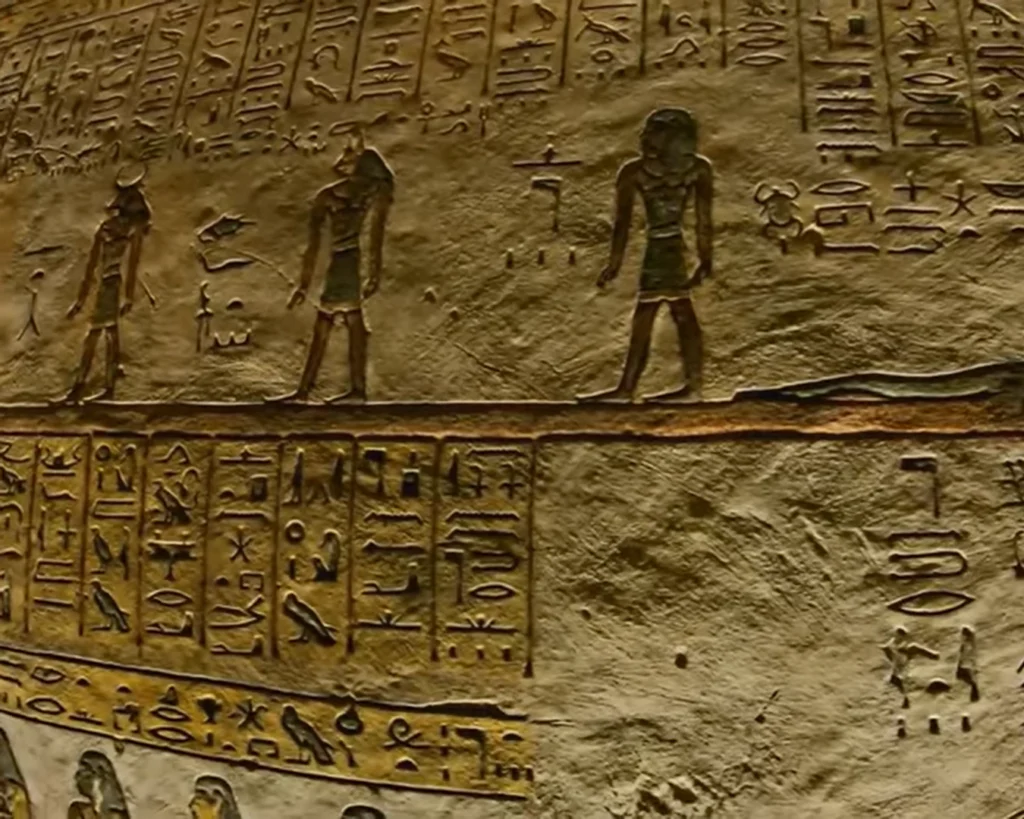
If Pangaea had remained intact, human history would have changed significantly. Early humans could have spread quickly across the land without barriers like oceans, mountains, or deserts. This accelerated migration might have led to faster cultural exchanges, advancements in technology, and the creation of larger, interconnected societies instead of isolated ones. While cultures like the Egyptians and Chinese developed separately in our world, Pangaea might have encouraged more uniform ideas but less cultural diversity.
However, larger civilizations could dominate, potentially leading to fewer independent societies and reduced creativity. Conflicts could escalate into continentwide wars over resources, involving millions of people. Trade would thrive with overland routes connecting different regions, allowing goods to flow freely but also increasing the risk of diseases spreading rapidly across the continent.
Religion and philosophy could develop in new ways, possibly resulting in unified spiritual traditions or intense conflicts over different beliefs. The industrial revolution would likely take a different path, with earlier industrialization leading to severe environmental damage. Nations could be larger and defined less by natural barriers, possibly giving rise to a single global government.
Language evolution would also be different, with fewer languages developing and a shared language emerging earlier. Overall, history on Pangaea would be marked by rapid progress alongside significant challenges and conflicts. Would humanity succeed as a united civilization or fall victim to the effects of Pangaea?
2) Modern World

If the continents had never drifted apart, the world today would be very different. The single landmass called Pangea would impact city development, transportation, trade, and Geopolitics. With all land connected, societies would interact on a larger scale. Today, oceans influence city locations and economies, making coastal areas centers of trade, culture, and innovation. On Pangea, limited coastlines would create mega cities along the edges, while the less hospitable interior would remain sparsely populated and used mainly for mining and agriculture.
Transportation would also change considerably. Instead of relying on shipping lanes over oceans, Pangea would favor overland routes, with extensive rail networks and highways connecting regions. Air travel would still be important for speed, but long flights over oceans might be less frequent. Geopolitics would shift as well; the absence of oceans could lead to larger nations or empires, potentially resulting in centralized governments and possibly authoritarian rule.
Economically, a unified Pangea would mean a tightly connected global economy. This would improve efficiency in trade but could also lead to vulnerabilities, as regional crises could disrupt the entire continent. Environmental issues would also worsen, as industrialization would face fewer natural barriers, leading to increased pollution and habitat destruction, while climate change could severely affect agricultural production.
A united Pangea might foster global identity, but it could reduce cultural diversity as local customs give way to global norms. Overall, while there are opportunities for progress, risks such as environmental damage and political instability would also grow. Would this world provide a better future for humanity, or create insurmountable challenges? These questions reflect how societies would adapt to effects of Pangaea.
1) Divided Earth
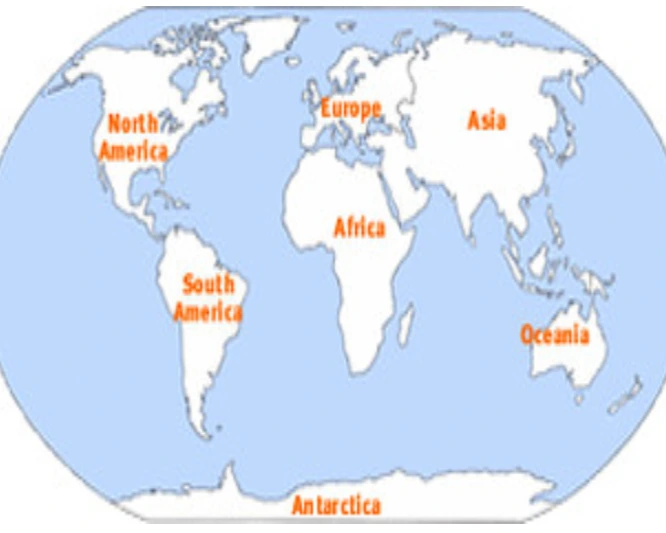
The effects of Pangaea illustrates how geography significantly affects life, societies, and environments. While a unified supercontinent could enhance connectivity, today’s separate continents showcase the advantages of diversity resulting from isolation. The split landmasses have allowed unique ecosystems to develop, leading to greater biodiversity that wouldn’t exist on a single land mass. Geographic isolation has helped species evolve independently, as seen with marsupials in Australia and lemurs in Madagascar.
Culturally, isolation has fostered human creativity and innovation. Civilizations, separated by natural barriers like oceans and mountains, have independently developed varied languages, traditions, and governance systems. Without these divisions, dominant cultures might have overspread, diminishing smaller ones. Additionally, separated continents help manage human conflicts and resource usage, as natural barriers limit the scale of wars and prevent resource depletion.
However, today’s divisions also present challenges, such as political conflicts and hindered responses to global issues like climate change. While Pangaea might have promoted cooperation against shared challenges, it could also heighten risks like pandemics. The lessons of Earth’s divisions show a need for balance between diversity and connectivity. A united Pangaea brings potential but also reminds us of the strengths found in our current fragmented geography. Would a united Pangaea be better or worse? Let us know your thoughts in the comments.
List Of Effects Of Pangaea
- A Unified Earth
- Climate And Ecosystems
- Human History
- Modern World
- Divided Earth
Top5 Amazing Facts About Finland